
Introduction
Field Service Management Software helps service businesses manage field operations in a simple and efficient way. Many companies compare in-house systems and off-the-shelf tools. This helps them choose what fits their cost, speed, and growth needs.
In-House Field Service Software
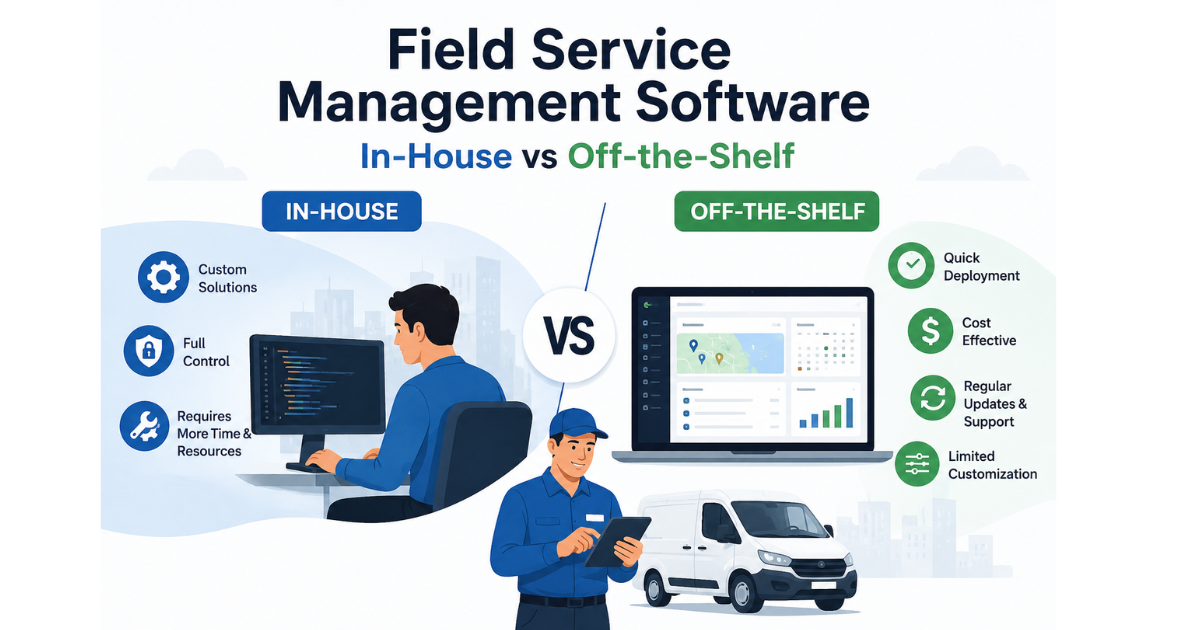
In-house systems are custom solutions built by internal teams. They match specific business needs and workflows. Companies use this type of Field Service Management Software because it gives full control over design, data, and features.
However, in-house systems need time and money. They also require skilled developers. In addition, teams must handle updates and fixes on their own. This can make long-term maintenance harder.
Off-the-Shelf Field Service Software
Off-the-shelf tools are ready-made systems used by many businesses. They include features like scheduling, dispatching, invoicing, and mobile access. As a result, companies can start quickly without long development time.
Moreover, vendors regularly update these systems. They also provide support, which reduces technical pressure on businesses. Therefore, this type of Field Service Management Software is ideal for fast implementation.
However, customization is limited. For example, companies may need to adjust their workflow to match the system. In addition, some advanced integrations may not be available.
Key Comparison
In-house systems offer flexibility and control. On the other hand, off-the-shelf solutions offer speed and ease of use. Both options serve different business needs depending on goals and resources.
Conclusion
Choosing the right Field Service Management Software depends on business size, budget, and future plans. In conclusion, in-house systems work best for full control, while off-the-shelf tools work best for quick setup and efficiency.
